
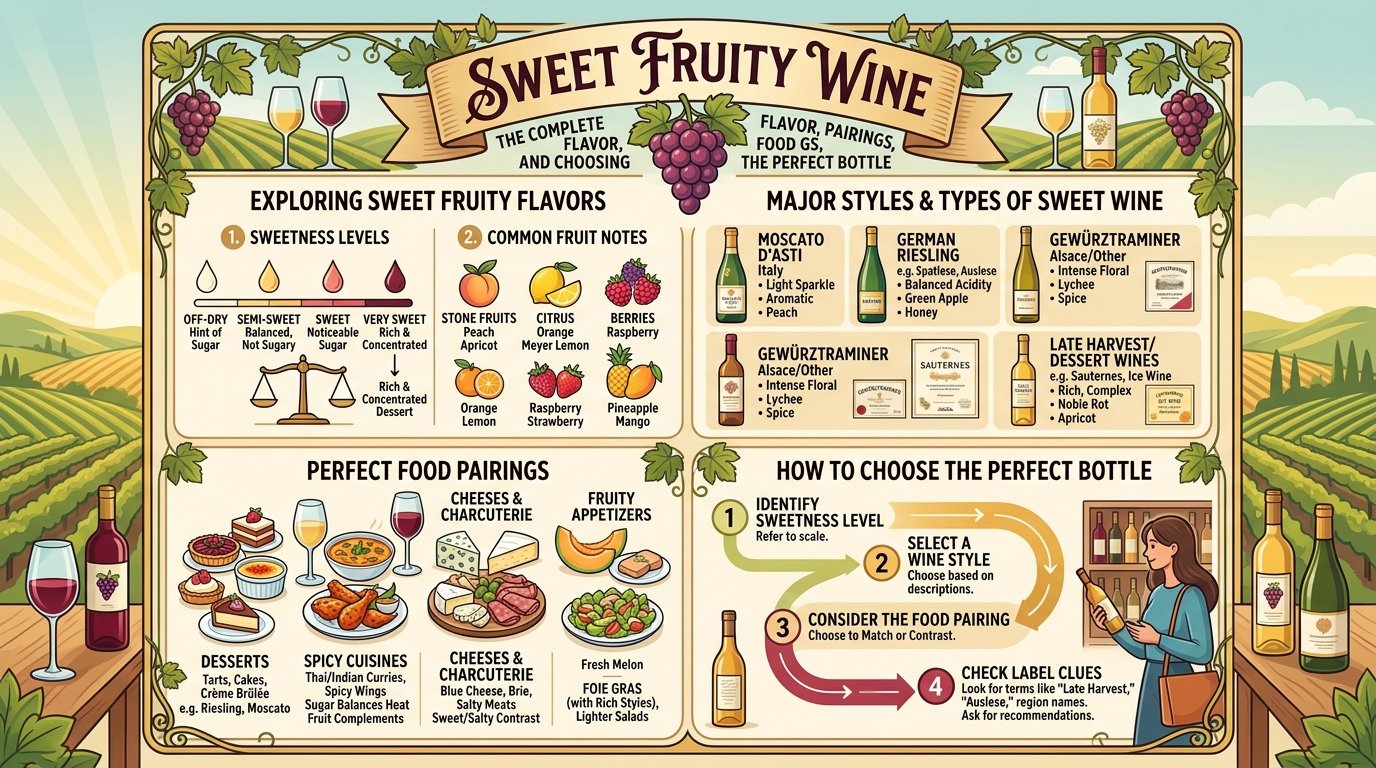
Sweet Fruity Wine: The Complete Guide to Flavor, Styles, Food Pairings, and Choosing the Perfect Bottle
Sweet wines have become increasingly popular among casual drinkers and experienced enthusiasts because they deliver approachable flavors, vibrant aromas, and remarkable versatility. Whether you are exploring wine for the first time or expanding your palate, sweet fruity wine offers an inviting experience that balances natural fruit character with pleasing sweetness.
From refreshing whites and elegant rosés to lightly sparkling options and dessert wines, there is a style suited to nearly every occasion. This guide explains how these wines are made, what flavors to expect, how to pair them with food, and how to confidently choose a bottle that matches your taste.
What Is Sweet Fruity Wine?
A sweet fruity wine is a wine that highlights ripe fruit flavors while retaining noticeable natural sweetness. Depending on the grape variety and winemaking method, the sweetness may come from residual sugar left after fermentation or from naturally concentrated fruit sugars. Popular flavor notes include peach, strawberry, mango, apricot, raspberry, melon, lychee, tropical fruits, and ripe citrus.
Unlike dry wines that emphasize acidity, minerality, or tannins, these wines focus on accessibility and expressive aromas. They appeal to new wine drinkers while still offering enough complexity for experienced enthusiasts who appreciate balanced sweetness, fresh acidity, and vibrant fruit expression.
What Makes These Wines Taste So Fruity?
Fruit-forward aromas begin in the vineyard, where grape variety, climate, and harvest timing influence flavor intensity. Warm growing regions often produce grapes with richer tropical fruit notes, while cooler climates emphasize crisp apple, pear, citrus, and berry characteristics. Careful harvesting preserves freshness while allowing optimal sugar development.
Winemakers further shape the final profile through fermentation techniques, yeast selection, temperature control, and aging choices. The best sweet fruity wine achieves harmony between sweetness and acidity, preventing the wine from tasting overly sugary while allowing natural fruit flavors to remain bright, fresh, and layered.
| Wine Style | Typical Fruit Flavors | Sweetness Level | Best Food Pairings | Ideal Serving Temperature |
|---|---|---|---|---|
| Moscato | Peach, orange blossom, apricot | High | Fruit desserts, spicy dishes | 6–8°C |
| Riesling (Off-Dry) | Green apple, lime, peach | Medium | Asian cuisine, seafood | 7–10°C |
| Rosé | Strawberry, raspberry, watermelon | Light to Medium | Salads, grilled chicken | 8–10°C |
| Lambrusco | Cherry, blackberry, plum | Medium | Pizza, cured meats | 10–12°C |
| Ice Wine | Honey, mango, apricot | Very High | Blue cheese, desserts | 8–10°C |
The diversity of styles means there is no single flavor profile that defines the category. Instead, the combination of fruit intensity, acidity, sweetness, and texture creates a wide spectrum of enjoyable experiences suitable for different occasions and personal preferences.
Popular Styles Worth Exploring
Moscato remains one of the world’s most recognizable examples because of its fragrant floral aromas, refreshing bubbles, and juicy stone-fruit flavors. Off-dry Riesling offers a brighter balance with citrus, peach, and mineral notes, while sweet rosé provides lively berry flavors that appeal to a wide audience.
Sparkling options such as Lambrusco introduce playful bubbles that enhance fresh fruit characteristics, while dessert wines like Ice Wine or late-harvest varieties deliver remarkable richness without sacrificing elegance. Every sweet fruity wine style brings its own personality, making exploration both enjoyable and rewarding.
How to Choose the Right Bottle
Choosing the ideal bottle starts by understanding your preferred sweetness level rather than focusing only on grape variety. Some people enjoy delicate sweetness balanced by crisp acidity, while others prefer lush dessert wines with concentrated fruit flavors and a velvety mouthfeel. Reading tasting notes can quickly reveal whether a wine emphasizes berries, tropical fruits, citrus, or orchard fruit.
Price is not always an indicator of enjoyment. Many affordable bottles offer exceptional quality, especially when produced in regions known for aromatic grape varieties. Selecting a sweet fruity wine based on flavor preferences, food plans, and serving occasion often leads to greater satisfaction than simply choosing the most expensive label.
Perfect Food Pairings
One of the greatest strengths of sweet fruity wine is its remarkable compatibility with food. Gentle sweetness can soften the heat of spicy cuisine, making it an excellent companion for Thai, Indian, Korean, or Mexican dishes. Fresh fruit salads, creamy cheeses, roasted poultry, and lightly seasoned seafood also benefit from the wine’s vibrant character.
Desserts naturally create memorable combinations, especially cheesecakes, fruit tarts, vanilla pastries, and dark chocolate with berry fillings. Successful pairing is about balance rather than matching sweetness alone, allowing fruit flavors in both the wine and the meal to complement one another without overwhelming the palate.
Serving and Storage Tips
Serving temperature significantly influences aroma and taste. Most styles perform best when lightly chilled because cooler temperatures preserve freshness while highlighting delicate fruit aromas. Overchilling can suppress flavor, while serving too warm may cause sweetness to dominate and reduce overall balance.
Proper storage is equally important for maintaining quality. Keep bottles away from direct sunlight, excessive heat, and dramatic temperature changes. An unopened sweet fruity wine stored under stable conditions will generally retain its intended flavor profile far better than one exposed to fluctuating environments.
Common Misconceptions About Sweet Wines
A persistent misconception is that sweeter wines are lower in quality than dry wines. In reality, producing balanced sweet wines often requires precise vineyard management, careful harvest timing, and meticulous fermentation control. Some of the world’s most celebrated wines are naturally sweet and command tremendous respect among critics and collectors.
Another myth suggests these wines are suitable only for beginners. Experienced wine lovers frequently appreciate a well-crafted sweet fruity wine because complexity is determined by balance, aroma, structure, and craftsmanship—not simply by sweetness level.
“Wine is sunlight, held together by water.” — Galileo Galilei
Current Trends and Why Demand Continues to Grow
Consumer interest increasingly favors approachable wines that deliver expressive fruit flavors without requiring extensive wine knowledge. Younger buyers, casual entertainers, and adventurous food lovers often seek wines that are easy to enjoy while still offering authentic craftsmanship and regional character.
Producers continue responding with innovative blends, sustainable vineyard practices, lower-alcohol styles, and premium expressions that showcase natural fruit purity. As global wine culture becomes more inclusive, sweet fruity wine continues to earn recognition as a versatile category suitable for celebrations, everyday meals, and memorable gatherings alike.
Conclusion
The enduring appeal of sweet fruity wine lies in its balance of freshness, aroma, sweetness, and versatility. From lively sparkling bottles to luxurious dessert wines, the category offers something for virtually every palate and occasion while encouraging exploration without intimidation.
Whether you are selecting your first bottle or refining an established collection, understanding grape varieties, serving temperatures, food pairings, and flavor profiles will help you appreciate every glass more deeply. A thoughtfully chosen sweet fruity wine can transform an ordinary meal into a memorable experience.
FAQ
This section answers common questions that both new and experienced wine drinkers frequently ask before buying or serving these wines.
Understanding these practical details can help you choose a bottle with greater confidence and enjoy the full character of sweet fruity wine.
Is sweet fruity wine only for beginners?
No. A well-made sweet fruity wine can offer impressive complexity, balance, and regional character that appeals to experienced wine enthusiasts as much as newcomers.
Which grapes are commonly used for sweet fruity wine?
Popular grape varieties include Moscato, Riesling, Gewürztraminer, Chenin Blanc, and several late-harvest varieties known for producing expressive fruit flavors.
Should sweet fruity wine always be served cold?
Most styles taste best when lightly chilled because cooler temperatures preserve freshness, enhance aromas, and maintain a balanced perception of sweetness.
What foods pair best with sweet fruity wine?
Spicy cuisine, creamy cheeses, fresh fruit, seafood, roasted poultry, cheesecakes, and fruit-based desserts all pair exceptionally well with sweet fruity wine.
Can sweet fruity wine age well?
Some styles are designed for early enjoyment, while premium dessert wines and certain late-harvest expressions can develop remarkable complexity with proper cellaring over many years.
Read More: 2024 Ford Edge SE: Complete Buyer’s Guide, Features, Performance, Pricing, and Ownership Insights